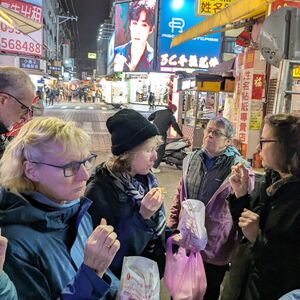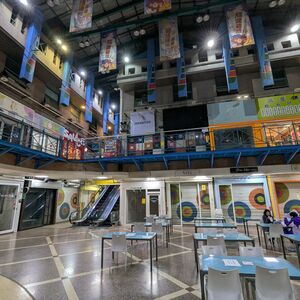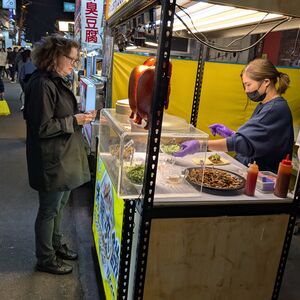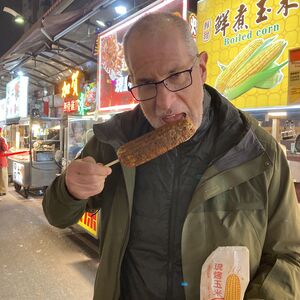
January 2026TaiwanA Voyage Home

IAD-SEA-but no TPE

edit
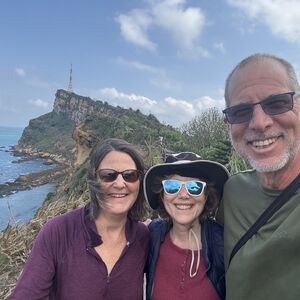
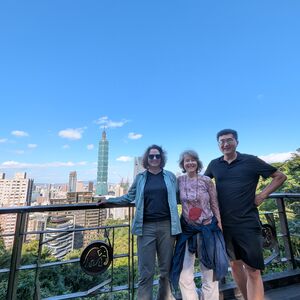
Amy, Kathi and Chau-Wen climb Elephant Mountain
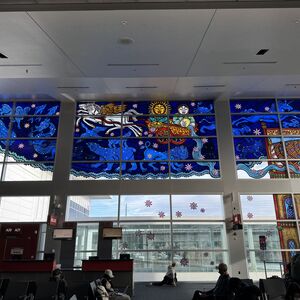
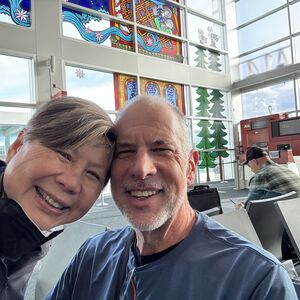
Waiting at the gate at Seatac
The constellations!
The constellations!

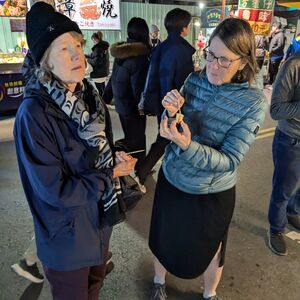
It will take 2,261 miles to fly from Dulles to Seattle, and another 6,063 miles to fly to Taipei Taoyuan. On January 3rd, it is a 4:45 AM start. We are to rendezvous with Mary and Deborah at the Taoyuan airport. We are the last four of nine to get there, and it will be the evening of January 4th when we arrive. Chau-Wen, Amy, Kathi, Bill and Lisa (in that order), have already arrived and spent time sampling Night market fare and walking the Old Dihua neighborhood. We are to meet our tour guide Kent and bus driver Mr. Lin at 9 AM the following morning (January 5th) to start our tour.

We arrive in Seattle at 9:30 AM, and settle down to wait for the 3:30 PM flight. Meanwhile, the WhatsApp group chat is chiming: Mary has a connection in Chicago before joining Deborah on their United Flight in San Francisco. Her flight is late, but whew! she makes it. People have shared arrivals, tips on driver pick-ups, hotel check-ins etc. We board our flight. We are in Premium Select, just below Business (this will become more important later). Two hours later, the plane still sits at the gate and due to some mechanical issue that could not be resolved, we all deplane. Food and hotel vouchers come through the Delta App and the flight is now delayed to 10 PM. (Note, always download the Airline's App, it has put us first in line in so many instances). I chat with the gate supervisor and he says confidently that the flight will not be leaving tonight. There is no way to bring in a crew for another flight. He is certain that they will simply add a flight that will most likely take off in the morning. We do some quick calculations. This will mean that we will miss the first day of Taipei tours, but can join the second day. It is now almost 7 PM. We are tired and decide to go to the hotel across the terminal. We let everyone know. On the way out, I asked to stop by the ticketing counter because the priority counter was nearly empty. We meet Finn, a younger version of Bowen Yang's SNL character.

Finn says, no, no, your flight is delayed, not cancelled. He is ready to send us back through security. We told him that the gate supervisor advised otherwise. He cocks his head and says, really? I need to talk to my manager. I look at Pete, he is leaning on the column, visibly tired. Finn says Oh, I was born in Taiwan too! We chat about leaving the country as youngsters. I mention the tour we are going to miss. I ask if there are other flight and he says, oh yes, China Airlines leaves at 12:10 AM. Will it really fly? Oh, yes, it's China Airlines (as if that meant anything to me). He checks the flight and there are no premium economy seats. We are disappointed. But Finn's eyes widen and he whispers, I wonder... He types quickly, and hits the enter-key with a flourish. Then he jumps back with an Oh-my-god, and smiles wide at me. He has booked us on the last two business class seats. We won't be seated together....no worries we assure him. The additional cost? $0. He hands us flimsy slips of paper and says to go to the China Airlines Counter and present the vouchers. It appears that the Premium Select upgrade to Business on China Airlines was within Delta's upgrade parameters.

China Airlines's counter will not open for another 45 minutes, so we wait, not quite believing this will work. But at 8:10, we get our boarding passes, we go through security again, Pete spends the rest of the food voucher on chocolates. This time, our passes also allow us into the Delta Lounge where we take showers and relax until boarding at 11:30. The flight attendant escorts us to our first lie-back pods, and arranges the bedding. We will arrive in Taoyuan at 5:00 AM or so Monday, the 5th. We update the Taiwan Arrival Card info, let Kent know of the change in plans. He tells us he has arranged for another driver to pick us up.

Did I mention that today is my mother's birthday? All day long I have been thinking about her and of going to Taiwan on her birthday. At one point I actually thought, mom, now that you are on the other side, can you do something about this mechanical problem? I had to laugh because five minutes after that, we de-planed. But then, there is Finn, and China Airlines, and lie-back seats. Who is to say that she wasn't watching out for us after all?

Christine P - Wonderful start! An adventure that ended very well!

SEA-TPE: West Across the Pacific

edit
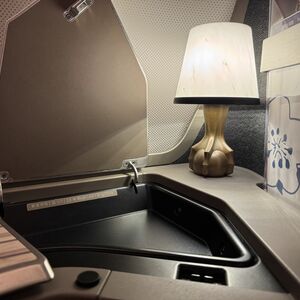
Great lighting: task, ambiance etc
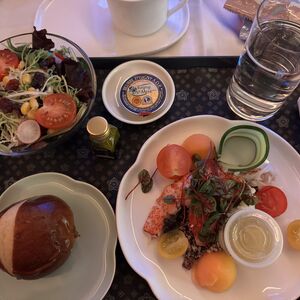
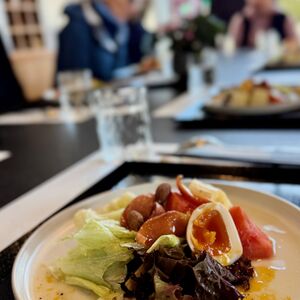
Before bedtime: lobster salad appetizer
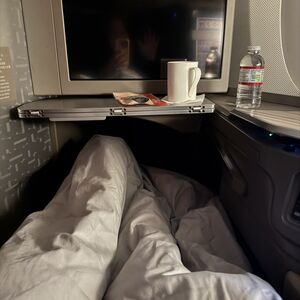
Stretching my legs mid-flight
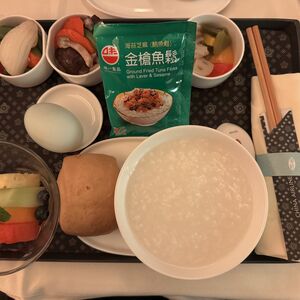
Morning breakfast: porridge, salted eggs, brown sugar steamed bun

We find out later that the replacement Delta flight was scheduled to take off 8 hours after the China Airlines flight. By then, we had already landed in Taipei.

The comfort of the lie-flat seats and comfy bedding is ridiculous. So is the gourmet menu and amenities. The service was also top-rate. Lobster salad, barbecue pork and fragrant rice. Taiwanese snacks. Traditional porridge with all the fixings. I slept for four hours after the first meal service and missed the snack service of noodles, but woke up for good coffee and breakfast. The pods were in a 1-2-1 arrangement. Pete was in the center, and I had the last pod on the right with a window.

China Airlines is the official Taiwan Airline, the last time I flew on one of their planes was May 1972 from Taipei's old airport to Tokyo. Then it was Tokyo to Honolulu, Honolulu to Los Angeles, and from there, Mexico City. That was also when I realized I wanted to see the world, eight years old and damn the nausea!

Why this trip? In January 2019, Blue and I met up with mom in Taipei for a two-week trip. Mom wanted to show Taiwan to Blue (and me). She thought it would be her last trip to Taiwan, and she wanted to stay through Chinese New Year and finally visit the tombs of her grandparents around the Qingming Festival(Tomb Sweeping Day). Mom was in Mexico when her grandparents died. The Hakka people begin the visit anywhere from the Lantern Festival (15th day of then first lunar month) to the actual day of the Qingming Festival (the 15th day after the Spring Equinox). That year, her brothers and sisters were going to trek to the tombs, and mom wanted to be there, to pay her respects, and find some closure.

Blue and I could not stay with her. Blue was in her final year at UMd, and I was still working. We all stayed with my Aunt Lyndel and visited the old clan homes and rode the train to Taichung and Hualien, visited with family and friends and had an absolutely fabulous time. I found the city vastly transformed from 1972 and 1998 (last time I visited Taiwan). It was modern and very easy to get around in the days of Google maps and Uber. I wanted to bring Pete back, and somehow, along the way, others expressed interest, especially Amy and Kathi. Chau-Wen, who visits Asia on a yearly basis, was also interested. So we set a time frame of January 2026.

Then in 2023, mom died, and for a while there, all desire to go to Taiwan perished with her. Memories of the trip with her overwhelmed me and I could not imagine being there without her guidance, her memories, without her prodding, her constant remember-whens... I was a bit panicked, more than a dozen people were now interested... I did not want to be Michelle Zauner crying in H Mart. I dragged my feet, but all the time gathering information in the background, slowly changing the trip from visiting all the places I have been to, to all the places I have yet to see.

And the trip came together after the Rice Reunion in Lake Placid in early august of 2025. I talked to Julia, who loved her stay and was so enthusiastic about Taiwan. I think it was partly her enthusiasm that finally propelled me to sit down and plan this trip. Amy, Deborah, and Blue had noticed my reticence, but no one pushed, all simply wanted me to be sure I wanted to do this. It took me a month, but by early September, the trip was on. Nine people sent in their deposits to Asia Odyssey Travel. The hotels were booked. We will have a local guide and a driver, our own bus, and a theme: TEA.

Taipei-Yehliu Geopark-Shifen-Old Street-Jiufen

edit
Taipei 101 at dawn
Taipei 101 at dawn
The renegades in Zone 3 at Yehliu
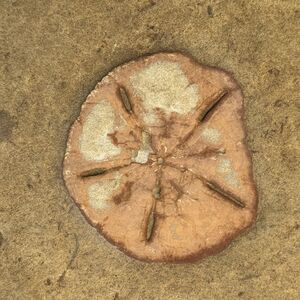
Sand dollar fossils
Sand dollar fossils
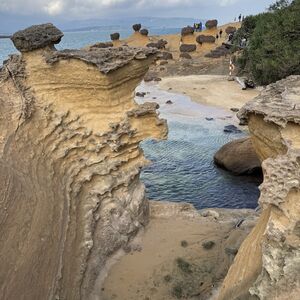
Yehliu Geo Park
Yehliu Geo Park
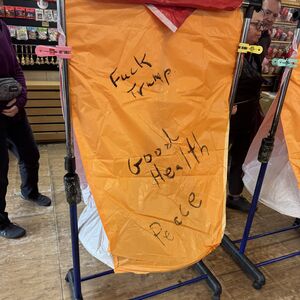
Shifen: Pete's message to the cosmos
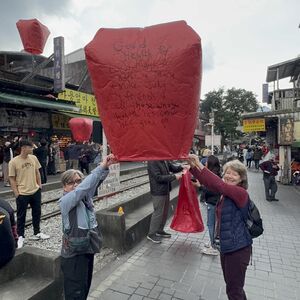
Shifen: Kathi and I before releasing our lantern
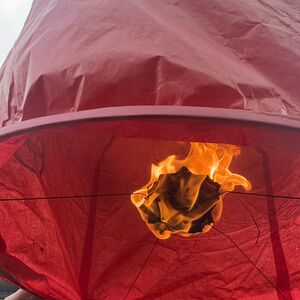
Shifen: the inside of the lantern
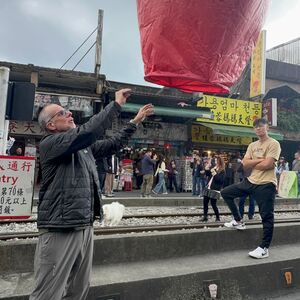
Shifen: Pete's release
Shifen: group pic
Shifen: group pic
at Shifen
at Shifen
Shifen: group pic by Chau-Wen
Shifen waterfall
Shifen waterfall
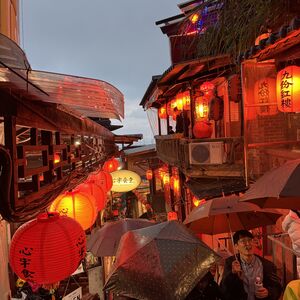
Jiufen: narrow, wet streets
A-Mei Teahouse with the snacks
Jiufen: view from A-mei Teahouse
Jiufen: rain, lanterns and umbrellas
Jiufen:  Pete says, too many people
Jiufen: Pete says, too many people
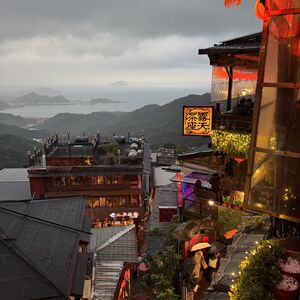
Jiufen: view of the Keelung Islet and Yehliu way in the mist

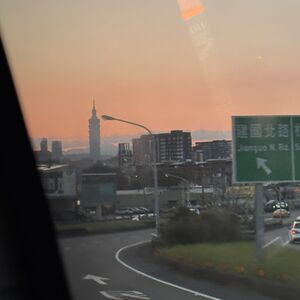
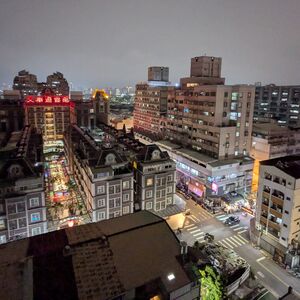
We land around 5:15, and sure enough, a man meets us at the T2 arrival hall and calls the driver. It will take 45-minutes to get from Taoyuan to Taipei and the Cosmos Hotel. It is Monday morning, and the city has not woken. I snap a picture of Taipei101 in the early morning light.

At the hotel, we stop by the dining room and greet the early risers. Seeing everyone at breakfast will become one of the best parts of the trip. We meet our tour guide and have the first surprise of the day: 1) it is a full-size bus, 2) we will not be going to Taipei 101 nor the Chiang-Kai Shek Memorial. Kent's itinerary and mine have the Taipei events reversed. It turns out that I did not receive the most recent and revised itinerary. And the full-size bus? Apparently, they had changed the bus thinking that we will each be bringing two full-size suitcases per person. After some back and forth with our contact, Tristan, all or most was resolved by the next morning.

Still, it was hilarious to see the nine of us spread out across a full-size bus. Chau-Wen dozed off in the back of the bus like a delinquent. It was a party bus, possibly decked out with karaoke and LED lights. Kent used a microphone to describe what we are going to see, and I might have caught 50% of what he said. We are headed North and West to the sea to Yehliu Geo Park with its weathered hoodoo rocks resembling queen's heads, mushrooms and tofu. It is packed with tourists and our small group of nine is lost among them. This is the first time everyone is together. Everyone knows someone if not everyone. Pete and I met Amy, Chau-Wen, and Kathi at Rice. Deborah and Mary are friends from the Mother-Daughter book/supper club. Bill and Lisa are friends, colleagues and traveling buddies. I am not concerned that the group will gel, I am more concerned that what I thought was our itinerary has been changed willy-nilly. And Kent? I don't think he knew what to do with us? We were more independent than most, not docile, I was a bit argumentative (chalk that down to jet-lag), and we did not listen well. While he advised us to stay in zones 1 and 2 due to time constraints, Pete, Kathi, Mary and Deborah trekked down to zone 3 and back.

My thoughts on Yehliu? I remember my dad talking about this wild place with these strange, out-of-this-world rocks carved by wind and water. He always wanted to take us, but back then, it would be a half-day trip instead of the 1 to 1.5 hours the bus took. My favorites? Seeing the ocean behind the formations, knowing how long this place has been around and how the winds and rocks protected Taiwan to the NW.

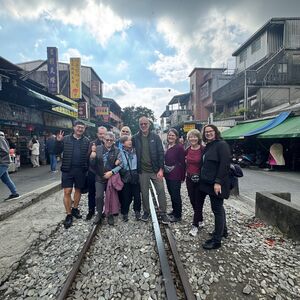
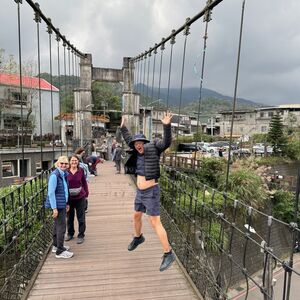
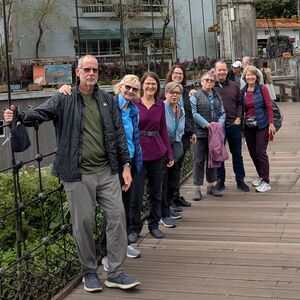
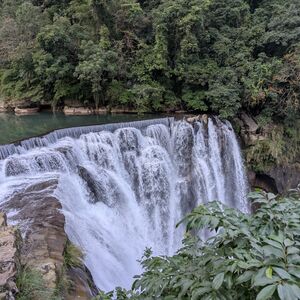
On the way back, we stopped by Shifen Old Street and release lanterns with messages. Blue and I had done that and I had loved the feel of releasing the straining lanterns filled with air. Kent knew exactly where to take us. He explained the colors of the lanterns: red for health, yellow for wealth, pink for romance and blue for career success. You can have single color panels or multi, and the lanterns are hung flat so you can add your messages to two sides, before they are opened to expose the other two sides. The lanterns are at least 4' high. Once the messages are written, they are moved outside to the railroad tracks and the lanterns are lit and filled with air. We hold, pose for videos and photos and release them. Our messages ranged from peace to anger (Pete). This area was a coal mining town and the custom was to release lanterns to signal miners' safety. Afterwards, we walked towards the footbridge and sampled peanut ice rolls and apple custard. The waterfall was small and picturesque.

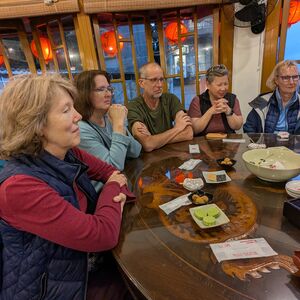
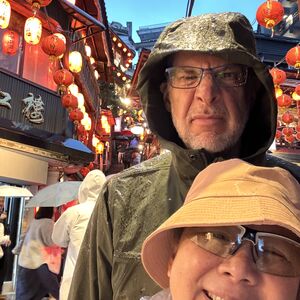
Next up was Jiufen Old Street, another mining town (gold) during the Japanese era that had narrow and steep streets filled with shops on both sides. Red lanterns hung below the overhanging eaves. The street is so narrow that one is well protected from the rain from the overlapping eaves. We arrive in the rain, and near dusk. Kent had made reservations at the A-mei Teahouse. This tea house resembled the bath house in Miyazaki's Spirited Away, and had an amazing view of the harbor. The surprise was the first lesson in tea service: hot water, clay pots, warming the cups and tea, and the tea snacks: green bean cakes, sweet, powdery preserved plums (made in house), brown sugar mochi, and savory sesame crackers. Black tea (which in mandarin is called Red Tea), is served in small sipping cups. And yes, as darkness drew in, all the lanterns were lit, and in the distance, the gentle curve of the bay. The massive crowds were a turn-off, and the food hawkers were constant. I wish I had been hungrier and gone for the taro balls. But I had a dinner date back in town with my childhood friend Jo-i and her family, so I refrained.

Back in Taipei, Chau-Wen took the others to dinner at the food court of the Taipei Main Station. Pete picked up chips and beer from the 7-Eleven, and I met Jo-i, her husband Rik, son Ansel, and her mom Mrs. Cheng at the hotel restaurant. Mr. Cheng, now in his nineties, no longer left the house much. Mrs. Cheng is 86, same age as my mom. The two of them were the stay-at-home-moms during our time in Mexico City. She and mom had many adventures we will never know about. Sigh. Of course, Jo-i would not hear of me paying for the bill, and she gifts me two canisters of TenRen Dong Ding Tea, a beautiful, honey, oolong.

Miaoli: Gongguan, Sanyi's Shengxing Village - Taichung

edit
The clan home in 2019
My birth room in 2019 with the roof intact
Communal Gardens in Taipei
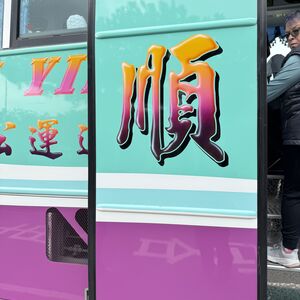
On the door of the bus: Shun (part of my father's name)
Standing in the plaza with the pond in the front
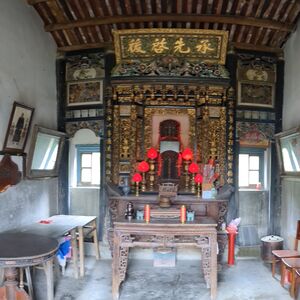
The Ancestor Hall and communal court
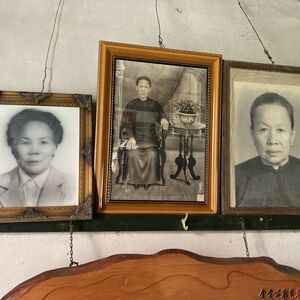
Picture on the left is of my grandmother, last matriarch
The altar
The altar
From Mary of the Lin Clan kitchen
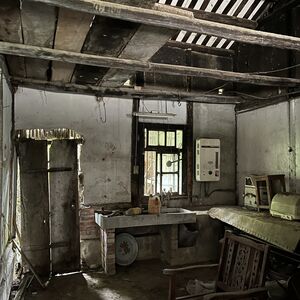
The room I was born - 2026 condition
In front of the Ancestor Hall
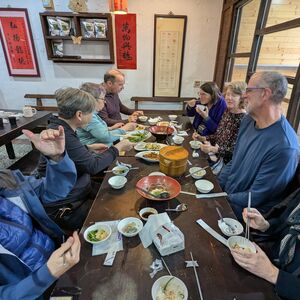
In Shengxing village: typical Hakka meal
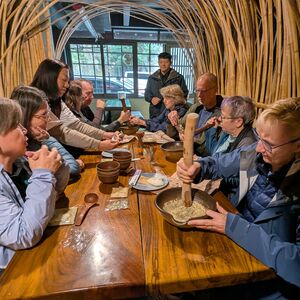
Deborah working hard to grind the seeds
Leicha demo
Leicha demo
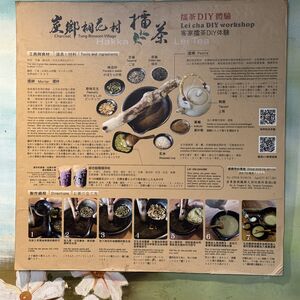
The how-to manual for Leicha
Walking to look at the Longteng Bridge Piers
Longteng Bridge Piers remains
Longteng Bridge pier remains
Landscape as we climb to Sanyi
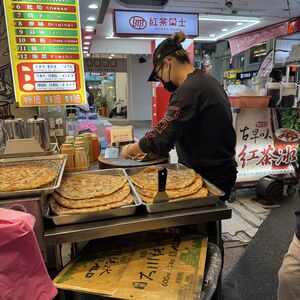
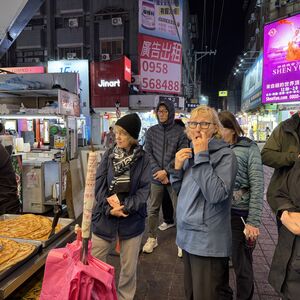
Fengchia night market: probably the best scallion pancakes ever!
Waiting, see the line forming behind us?
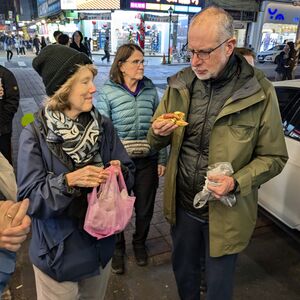
So good.
So good.
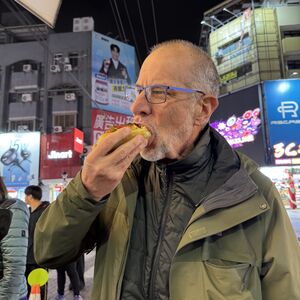
Wait, was that a hot dog?
Fengchia night market
Kent takes us on a shortcut through some interesting malls
Tainan Fengchia Night market
Fengchia night market
View of the neighborhood from Chau-Wen's window
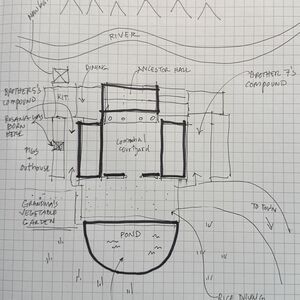
Miaoli Clan Home Plan

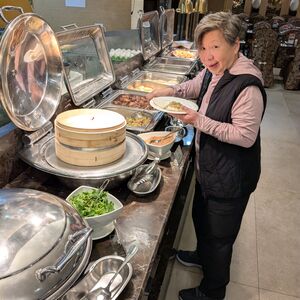
We leave Taipei and The Cosmos hotel today and start our counter-clockwise tour of the island. I had selected 4 and 5 star hotels mainly for the breakfast options. In Taiwan, most hotels in that range have really good breakfast buffets. I figured that we start the day with a good meal, and then it doesn't matter as much what happens the rest of the day, and we can graze as much as we like. Most of the hotels will have a traditional Taiwanese breakfast, vegetarian, Japanese and western foods. Pete misses his oatmeal, but I had a blast with the congee, steamed buns, noodles and all the vegetarian fare, including sautéed vegetables. There is always fruit and bread as well.

The bus has shrunk and now has a total of maybe 10 rows of seats total, perfect for each of us to take a row. And the word on the side of the bus is part of my father's name: Shun (following, all right, succession.) Coincidence?

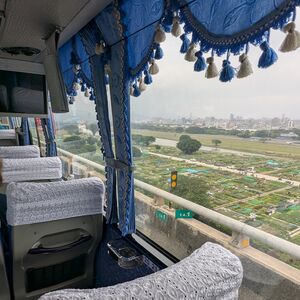
It will take an hour and a half to drive south along Taiwan Route 1. The highway is fast and built after I left Taiwan. I do marvel at their construction, all in segments, and elevated (more on this later). The riverbeds are dry and rocky because it is winter. Rest areas are clean and modern. Being Taiwan, there are a combination of squat toilets and western style toilets. The toilets are grouped with exterior ventilation and ganged wash areas at either end. They are outside the food courts. Food courts showcase local products, although they always have a FamilyMart or a 7Eleven. Our one stop on the way to Gongguan was fun. Chau-Wen walked back to the bus with a fresh steamed bun. So jealous.

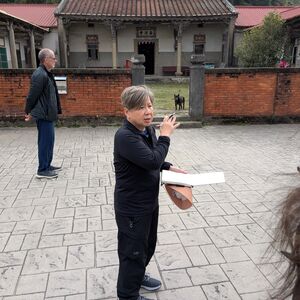
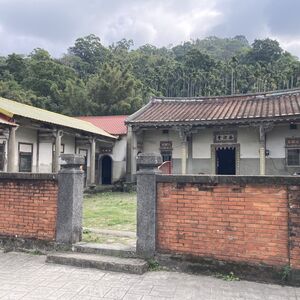
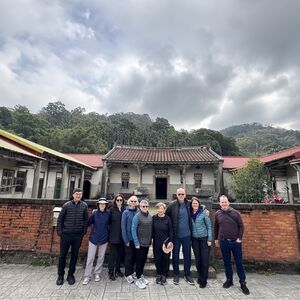
When planning the tour, I made sure to include a few very personal stops. The first one is the Lin Clan home in Gongguan, Miaoli County. Miaoli sits in the widest plain in Taiwan, and I think of it as prime rice growing area. (I was surprised to hear Kent describe the area as coffee and strawberry growing regions today). My parents are both descended from Hakka people who settled in the area in the mid to late 1700s. On the Lin side, three brothers crossed the Taiwan Strait from Fujian Province in China. One brother died in the crossing, but the other two lived and prospered. In the late 1880s, the 5th and 7th brothers of one generation decided to built a new home with one shared Ancestral Hall, courtyard, and a half-moon pond. It was an inverted U-shape with the raised Ancestor hall facing an open courtyard and the pond outside. The two brothers had their own residential wings adjacent to the main court. My grandfather's was on the left as you faced the hall. No one on our side lives there anymore, and my 3rd uncle sold it to a distant relative who has turned the main areas into her pottery studio. The other side is still occupied and when I was there with mom, they remembered her and my father. This time, I am sad to say, I made no contact, but was ready to spout my parental genealogy if anyone asked (I had called my Uncle Jensen in San Diego and memorized a few key names just in case.)

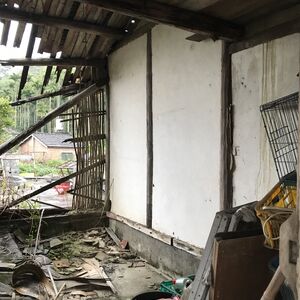
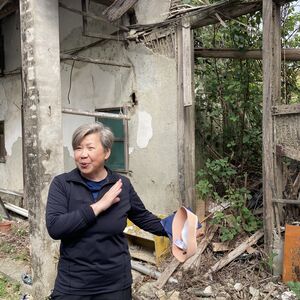
The ancestor hall always sits higher and contains the altar, pictures and the ancestral tablets. The wood beams are painted and carved, as are the columns and the bases. The altar is well maintained, and the buildings forming the courtyard are also maintained, but the other side has been left to the elements. Since 2019, even more of the building has disintegrated, giving me a backwards view of its construction. I was born in one of the rooms in the side wing that has lost its rear wall and roof. Sixty-two years ago, the county hospital sent my mom home after I refused to be delivered. As soon as we got back to the clan home, my mom's contractions began and there was no time to go back to the hospital. My grandmother and a mid-wife delivered me in that room, and I spent the first forty days of life in the clan home. I also spent time here with my cousins in the summers. We would catch fireflies and put them in jars, and they would abandon me in the river when they got tired of me. Grandma and I would walk from the town to the clan home in the dark, along a narrow road lit by the light of the moon and stars. Seeing it again and showing it to friends, I would not have ever imagined how amazing sharing it would be.

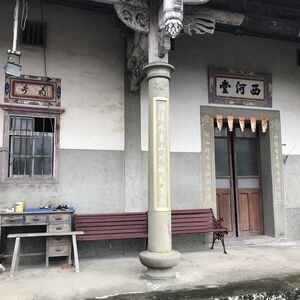
On the way back to the bus Kent looks up the name written on the hall which I always translated to Hall to the West of the river. But it turns out that all Lin family ancestor halls have the same name. This explains the look-alike hall not too far away from this one (which is actually where the bus is parked). Hmm, there are a lot of Lins. My dad was one of ten kids, the first of six boys.

Our next stop is in Sanyi, specifically Shengxing Village, which has the highest railway station in Taiwan. Built by the Japanese in 1905, there are no longer trains running. The Japanese needed the station to harvest the Taiwan cedars, hinoki, that they shipped back to Japan for their temples. The area is known for the wood carvings. We have lunch in a Hakka restaurant where an old grandma waved us in saying that the food was really good. We sat down and Chau-Wen started to order, but we were giving him too many restrictions. Kent eventually helped him out by adding some specific dishes to cater to our wide food needs. Taiwan cuisine is seafood and pork centric. Many of the foods have dried salted shrimp as a base, especially Hakka dishes. Because of shellfish allergies, we had to have some foods without them. Needless to say, the food was fresh and delicious. There is nothing compared to freshly sautéed greens, even in winter. In Taiwan, the variety of sautéed green leaves (and always with garlic) includes water spinach, chrysanthemum greens, and A-Choy, Taiwanese lettuce. Din Tai Fung has a Taiwanese Cabbage with Garlic that is fairly accurate of the quick sauté of vegetables over high heat to maintain its flavor and crunch.

After lunch, we head to the Leicha tea shop. Leicha is a pounded tea, it is savory and not too sweet. We go into a bamboo woven cave and are divided into groups of three. We take turns to grind the tea, black sesame seeds, nuts, and puffed rice in a shallow ceramic bowl with a grooved bed. It is really delicious, and triggers a memory. While I did not have leicha growing up, I prepped it for my mom for breakfast from ready-made packets, and I even took it to work. How could I have forgotten so quickly?!

After tea, we stop by the Longteng Bridge (aka Yutengping). This was built back in 1906 by the Japanese (and designed by American Civil Engineers, interesting story here is that one of them, Theodore Cooper, is best known as the engineer on the Quebec Bridge that collapsed in 1907). Only the piers remain after the 1935 Shinchiku-Taichu earthquake. The bridge is also mentioned in the Taiwan Travelogue (Yang Jo-tsu's novel set in 1937 Taiwan). Side note: the 1935 earthquake was devastating and the deadliest in Taiwan's recorded history. The epicenter of the 7.1 quake was in Sanyi. Only 21 kilometers away, my mom's oldest brother died in his wet nurse's arms when the walls fell on them as they tried to leave the house. She did not tell me this until the last decade of her life.

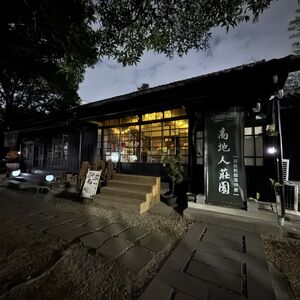
Our last stop is the Holiday Inn Express Fengchia, in Taichung. A city that by its name means Taiwan's middle. The hotel is quirky, with wallpaper that is a drawn map of the city with highlights, a nice gym, plus great food and very close to the Fengchia Night Market, one of the best in Taiwan. It is also close to Kent's alma mater, Feng Chia University. Because it is late, he places a bubble tea order from Chun Shui Tang in Taichung, the original birthplace of bubble tea. It is delicious, but I end up setting half of it aside. He takes us through the night market and points out his favorites. So begins a night of eating.

National Taichung Theater - Sun Moon Lake via Highway 6 - Sun Moon Lake

edit
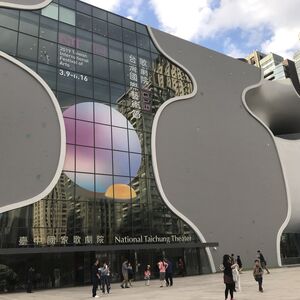
2019 Close up of facade
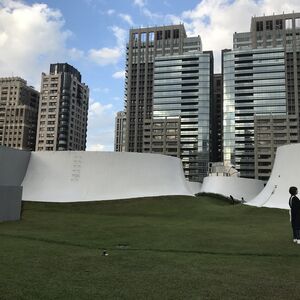
From 2019: view of roof of theater
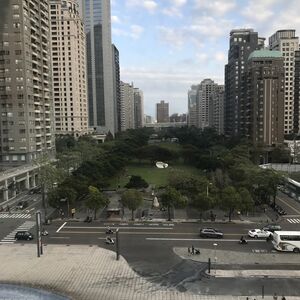
From 2019: view of the park in front of Theater
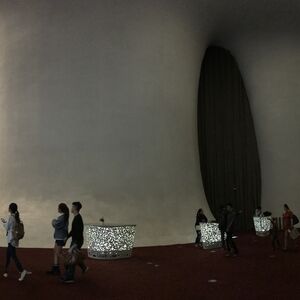
2019 Panorama of interior
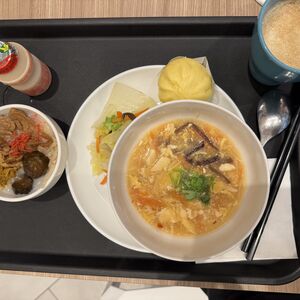
Taichung: my breakfast
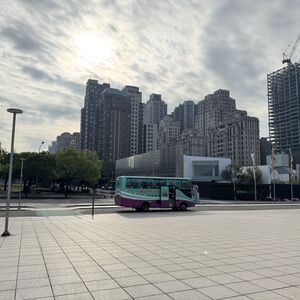
Our bus in front of National Taichung Theater
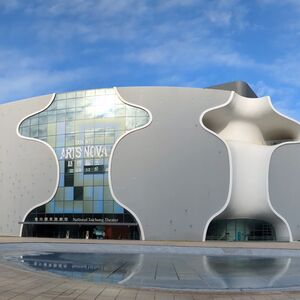
Taichung The National Theater (pano from Chau-Wen)
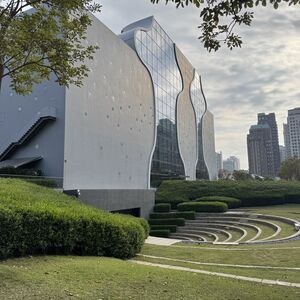
Outdoor Amphitheater
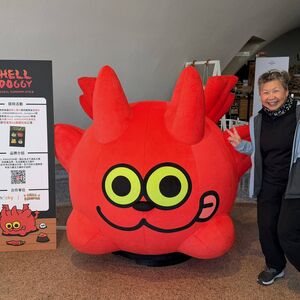
Inside the theater with Helldoggy
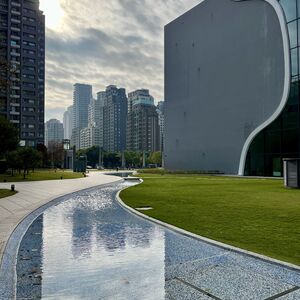
National Taichung Theater exterior
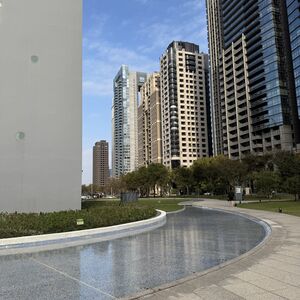
Theater and the surrounding buildings
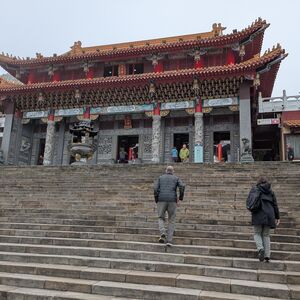
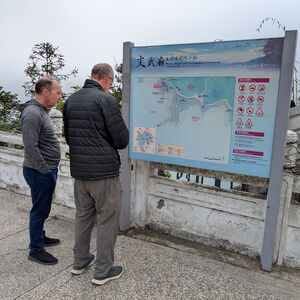
Wen Wu Temple: Main entrance
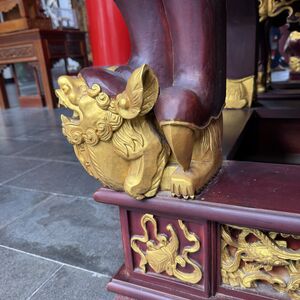
Wen Wu Temple detail
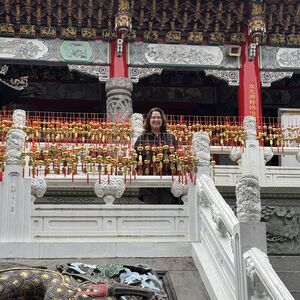
Hi Amy!
Hi Amy!
Wen Wu Temple
Wen Wu Temple
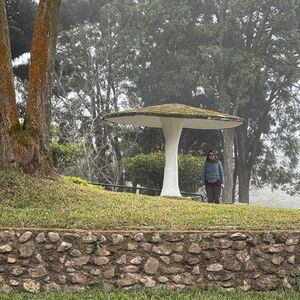
Wen Wu Temple grounds: mushrooms are supersized here
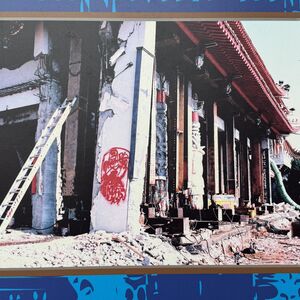
Wen Wu Temple: 1999 quake aftermath
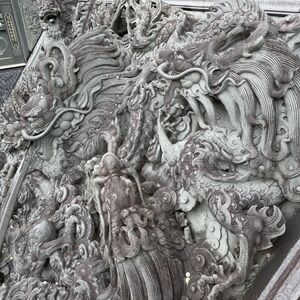
Wen Wu Temple: detail of the dragon carvings
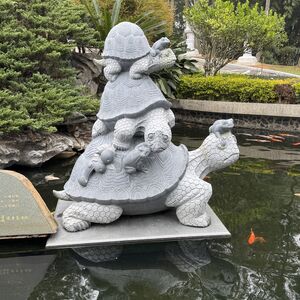
Wen Wu Temple: stacked turtles signifying the endurance of generations
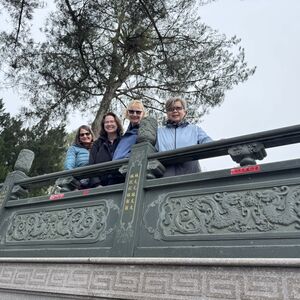
Wen Wu Temple: Mary, Amy, Deborah and me
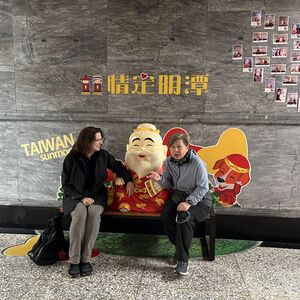
Amy and I with the "Love God"?
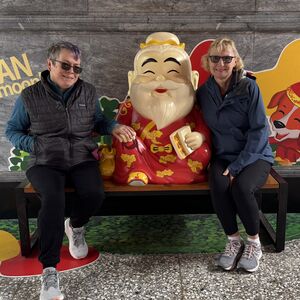
When Wu Temple: Lisa and Deborah with the Love god?
Pete and Bill are planning their ride
Our first ride
Our first ride
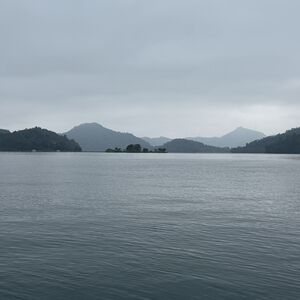
Can't get enough of this view
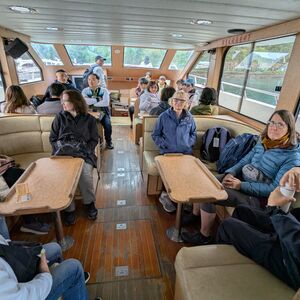
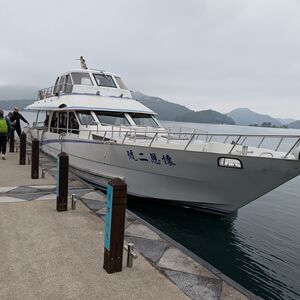
On the ferry to Xuanguang Pier
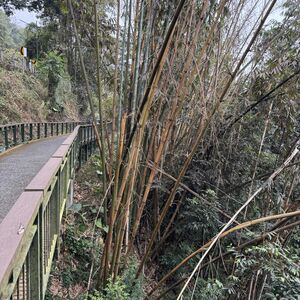
Part of the trail
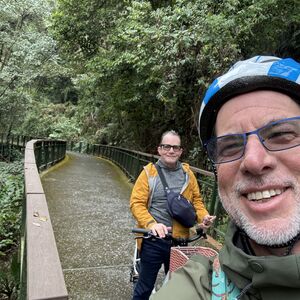
Part of the trail
Pete and Bill on their ride, happy to be away from the madding crowd
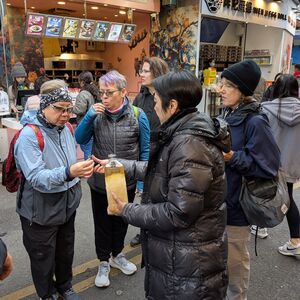
Sampling vinegars in Ita Thao
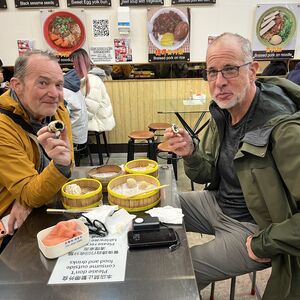
Ita Thao: Pete and Bill have no problems finding a place to eat
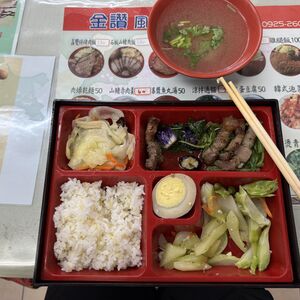
Lunch in Ita Thao
Lunch in Ita Thao
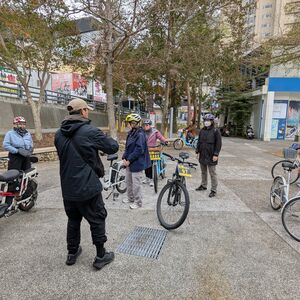
Checking out our bikes
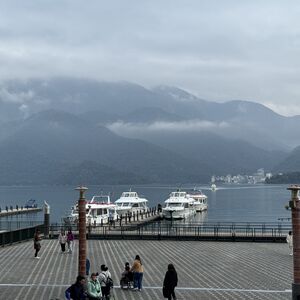
Looking out from Shuishe Pier
View from Xiangshan visitor center
Chau-wen records us viewing the view
View from Xiangshan visitor center
Xiangshan visitor center
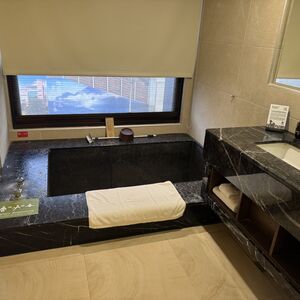
The deep soaking tub inside our room
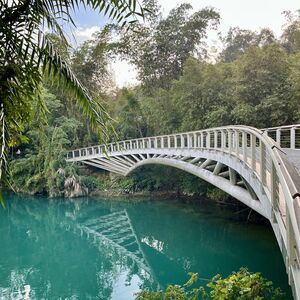
Part of the bike path
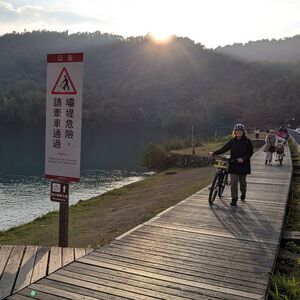
Hi Amy!
Hi Amy!
Panorama: we walk our bikes across this section
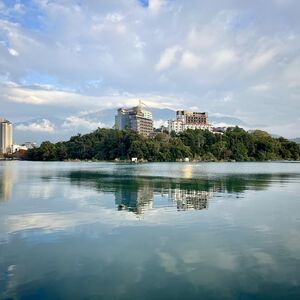
Lisa captures the afternoon sun
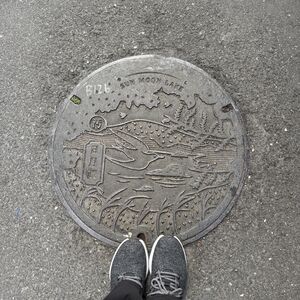
Sun Moon Lake Manhole Cover
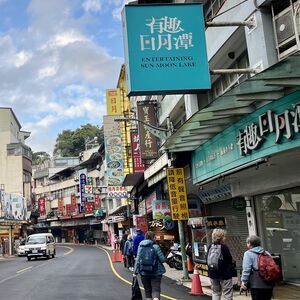
Shishe: Walking back to our hotel
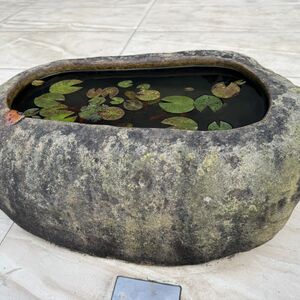
The walk to the hotel is lined with these beautiful mini ponds
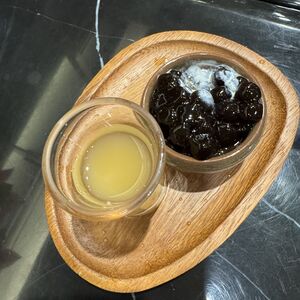
Millet wine and tea jelly: I finish mine and Deborah's
Deborah braves the tapioca
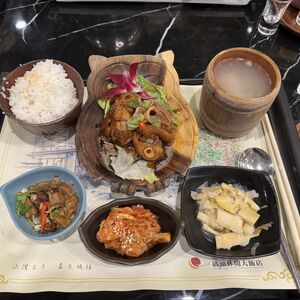
I opted for pork knuckles instead of hot pot.  OMG the bamboo shoots were amazing!!!
I opted for pork knuckles instead of hot pot. OMG the bamboo shoots were amazing!!!
The food is here!
The food is here!
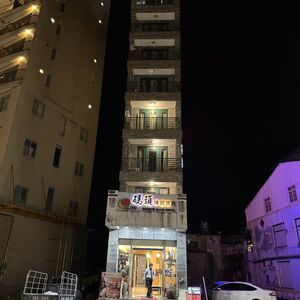
Shuishe: Not sure what to make of this hotel

It is a bit decadent to start the day with milky bubble tea, but it doesn't stop me. The tea is fragrant, the milk is silky, and the tapioca is still soft since they were just cooked the afternoon before. I polish the drink off before going down to breakfast. But first, a warning note to readers: the entries from here may get very long on details alone.

Today we head to Sun Moon Lake. It is officially Pete's and my third day in the country. The excitement and amount of traveling we are doing is a wonderful antidote to jet lag. On our way out of town, I asked Kent to make another detour to see a building by the Japanese Architect, Toyo Ito. Ito is one of my all-time heroes. He is known for creating conceptual architecture, so it is always a treat for me to see the actual built structures.

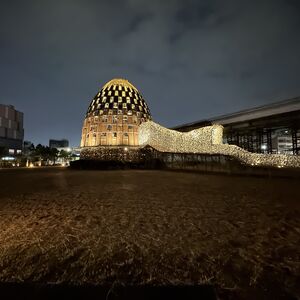
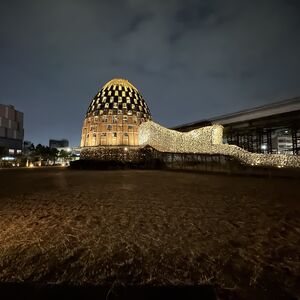
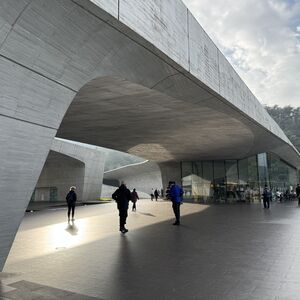
Ito's National Taichung Theater officially opened in 2016, and I had visited it in 2019. It is a "sound cave" located in the midst of this very master-minded cityscape. Kent explained that the area was farmland until the mid-80's and now it is filled with wide boulevards and high rises in the style of Japanese Empire architecture of the 1920s and 30s, somewhat art-deco buildings capped with impressive penthouses, and real estate as expensive as Taipei's. I can't remember if I was coherent enough to convey all this to my fellow travelers. But no matter, the building should speak for itself.

The bus drops us off at the front of the plaza. It is not 9:30 and we file out and immediately explore the plaza and the structure. I am sure some of us are already trying to figure out how to get in (like me.) From the exterior, it is a white box that has vase-like shapes of glass cut into the facade. During the day, it appears as just an unusual box, but the floor to roof glass lets one see into the curved and column-less interior at night. Nature, specifically water, flows in and out and around the building. Inside, air conditioning and ventilation are hidden in the floors. Coming around the back, we discover an open door and, ta-da! a cafe. We run in to catch a glimpse of the very unique interior. It is still entrancing even though the building exterior could use a refresh after a decade standing in the humid air of Tainan. I promise myself to come back and attend a concert next time.

It really gladdened my heart to see the enthusiasm from my fellow travelers. I love everyone's curiosity!

We leave the city and travel East on Highway 6. Like the US, the N-S highways are odd and the E-W highways are even. The bus has great windows. As we leave Tainan, the highway rises above its surroundings on piers and I can't shake (wink, wink) the feeling we are experiencing seismic design. I keep thinking we are crossing rivers, but that is not the case, the road is simply suspended above like viaducts. As the road curves, I see it is more segmented than normal and the expansion joints are broader than those I see in US highway design. I am doubly interested because this is the highway that leads into Puli, where my mom's younger brother lives, and where my grandfather settled after leaving Miaoli. Back in 1999, the second deadliest recorded earthquake hit and Puli was cut-off for months. Luckily, my uncle's house was not damaged. Later I will find out that Highway 6 did indeed incorporate seismic design following that 1999 earthquake: existing bridges received additional pillars and thickened walls, elasticity was incorporated into the structures, hence the extra wide expansion joints, and the route weaves between mountains rather than hugging the side to protect it from unstable mountainsides, and lastly, Highway 6 is 70% viaduct to bypass unstable terrain. It is a beautiful drive, I feel we are traveling on a ribbon threading through the valleys.

Before turning south at Puli, we stop by a large bake shop (restrooms!) selling Sun cakes, a flaky round pastry. Chau-wen buys up boxes of the different kinds of cakes to share. This will be the beginning of our bus snack bag.

Ah, Sun Moon Lake...in my mind, it has always been this mythical place where my parents went on their honeymoon back in January of 1963. I have a picture of my mom in a new swimsuit by the water. Upon further reflection, what was she thinking of? January! Mom always said the suit never got wet...I think now of all the things parents tell their children that make no sense.

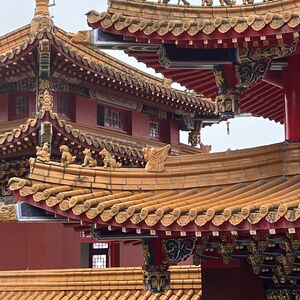
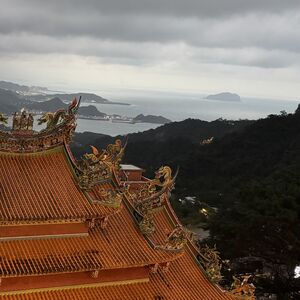
On the way there, we stop by Wen Wu Temple. Kent gives us a short lecture on temple etiquette. Enter through the right, and leave on the left. Wen Wu Temple is huge, partly because it houses the gods from several smaller temples. It fronts the lake, and part of the temple grounds is terraced into the mountain side. A lot of it had to be rebuilt after the 1999 quake. Awesome views and carvings, but the lake is shrouded in mist.

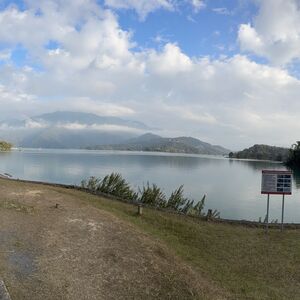
We drop the bags off at Fuli Hot Springs Resort in the town of Shuishe on the NW side of the lake. Today's itinerary includes boating, walking, biking and eating. We had read that the bike path around the lake is among the top ten most beautiful in the world, and Pete and Bill will check it out. We walk to the bike shop, and Pete and Bill are fitted with electric bikes and helmets and they zip off in a clockwise direction. Kent takes us to the Shuishe Pier for a short ride across the lake to the Xuanguang Temple Pier and then to Ita Thao Pier and back to Shuishe. We will have lunch in Ita Thao. Back in Shuishe, we will do a short bike ride to Xiangshan Visitor Center. I had originally wanted to take a taxi to see my uncle, but he lives outside of Puli and the ride would have been at least 45 minutes of mountain roads. So, I will table it for another time now that I know I will be back.

While Pete and Bill are being fitted for their bikes, I see a stand selling tea eggs and mushrooms. I was just about to buy some when Kent came up and whispered that there were better ones at our next stop. Now I can't wait. On the way to Xuanguang Temple, we pass by the little Lalu Island with its marble statue of a white dear. The ground is sacred to the Thao tribe, and the story goes that the deer led them to the lake, which was abundant with fish, and thus saved the tribe from starvation. The morning is gray and the fog sits heavy on the water. It is very different from the sunny day in 2019 when I visited with mom. At the Xuanguang Temple Pier, Kent points to a stand and tells me that Ah-Ma has been selling her mushroom tea eggs here forever. Delicious. Another memory: mom is polishing off a tea egg in the waiting area of the pier and looks at me with a smile: sorry, she said, I ate your egg while you and Blue were climbing to the temple. Happy tears that I got to taste it after all.

In Ita Thao, Kent points us to a shop for locally fermented vinegars. The fruits are from the area. This area is known for its fruits, bamboo and mushrooms. (At my uncle's, we picked passion fruits off tree, and spooned out the inside. Chau-Wen noted that the ones in Taiwan are purple, and not the yellow ones found in Hawaii). We get samples right there on the street. The black-tea flavored plum vinegar is delicious and I get a bottle. Others buy various flavors to take home. I am looking for Pete and Bill, Ita Thao is roughly halfway around the lake for them. We find them indulging in mushroom shaped steamed buns and other dim-sum like goodies. Kent is ordering bento boxes for us and we also try a specialty of the region, sticky rice steamed inside bamboo stalks.

I am a bit apprehensive about the bike ride, but hey, I am getting an electric one, so how hard can it be. Back across the lake in Shuishe, we rent our bikes from the same shop. They do have helmets. The bikes are serviceable, but just. The idea is to ride along the trails. The sun has come out, and so everyone is now walking on the trails. The foot traffic and the poorly maintained bikes made the ride challenging. Still, I can see why this would rank among the top rides. The lake is always visible, and so are the mountains. Kathi, Mary, and Amy ride beyond the visitor center, but Lisa, Chau-Wen, Deborah and I just hang out at the center and then go back to Shuishe.

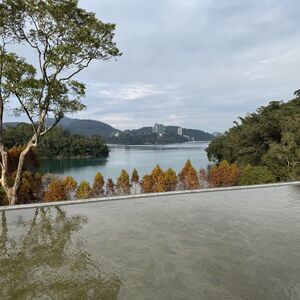
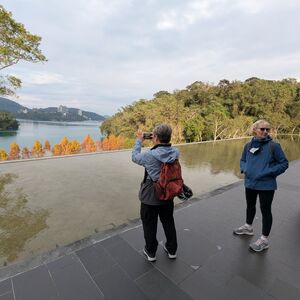
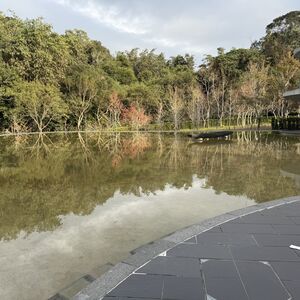
The center, by Norihiko Dan, is of minimalist concrete design, with two low and flat wings that frame the surrounding landscape. It opened in 2010. It has a green roof that slopes up. A reflecting pool between the main building and the lake extend the lake, sky and trees to the building. I like it.

The ride back is uneventful except for an oncoming rider riding on the wrong side of the path. However, no accidents. We get back to the hotel and clean up before an individual hotpot dinner in town. Fuli Hot Springs hotel has deep spa soaking tubs in the rooms. A curtain separates the bedroom from the bath area. Pete and I definitely took advantage of the spa tubs. Hot water came gushing in and filled the tub in no time at all. The soak was wonderful after two full days of non-stop sight-seeing. These rooms can certainly use a refresh though.

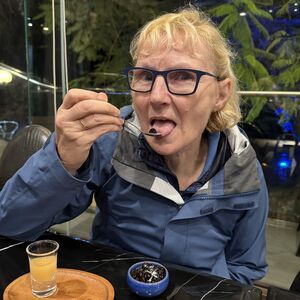
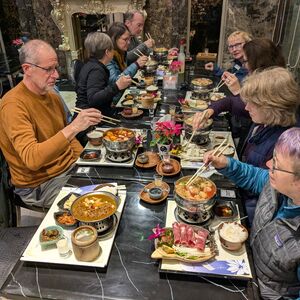
Dinner was fun. It will always be a challenge to seat so many people at once. Most of us ordered hotpots with bubbling broth. The appetizers/desserts were small dishes of fresh tapioca balls. Deborah was game to try it since she promised her daughter Alex she would. Honestly, I don't think it made it past her lips. I sent Alex the pic anyway, and I am sure I polished off what she didn't eat.

On our way back to the hotel, Chau-Wen ducks into a bakery. I have the appetite, but not the room. Sucks to get old sometimes. We will be visiting tea plantations tomorrow!
Why Tea? Tea Picking in Dong Ding Mountain in Lugu Township - Chiayi City

edit
Breakfast at Sun Moon Lake
Deborah looking very chic in her tea picking garb
Yen's Tea
Yen's Tea
Just an ussie for posterity
Rows of tea plants
Rows of tea plants
Looking for new growth
Chau-Wen tries to fill his basket
Tomato supervising Mary
We take a break in the fields
The souvenir tea plant.  The top two leaves are the ones to be used.
The souvenir tea plant. The top two leaves are the ones to be used.
Stopping to see the local god's temple on the way back
Tomato preparing teas while we work
What do you mean, we roll the tea?
Man, it smells so good!
This tray has been judged finished
More tea sampling after the hard work of rolling is done
We hand these back and the teas will be roasted and the final product delivered to our hotel
First course at Wei Lu Zhu Tea
The tea shoppe
The tea shoppe
I can't wait to dig in
Our lunch table
Our lunch table
Upstairs at our tea ceremony class
No one mentioned aprons!
View of the surrounding tea plantations
I think my tea is Oriental Beauty
Bill wearing the apron that says: Old Tea
Amy ladling the hot water into the brew cup
We learn to brew.  Note the hot water cauldron in the center
We learn to brew. Note the hot water cauldron in the center
It is tricky to ladle hot water into these tiny cups
Dessert Served with the tea we brewed
Dessert
Dessert
Bill outside the Tea House
A walk is called for after copious amounts of food and tea
Country path around the tea house
Chiayi: statue of Pitcher Wu Ming-chieh, player in the team that came in second in Japan in 1931
The tofu pudding shop.  Looks empty now, but was bustling when I came back later
The tofu pudding shop. Looks empty now, but was bustling when I came back later
Looking for Chiayi's specialty: Turkey rice
Too many choices
Too many choices
Chiayi: never-ending amount of food to try
Hanging out in Chau-wen's room

Why tea? I would like to say that tea is life, that it is synonymous with Taiwan and my memories of the island. But I would be exaggerating. Growing up, tea was reserved for the elders and for company. At banquets, kids would get a taste of Jasmine tea's light florals, or be lucky enough to add extra rock candy to the Chrysanthemum teas. Those, nice, honey-Oolongs Taiwan is known for? Served only on special occasions. At home, we drank boiled water.

But culturally, popular songs and TV soap operas were full of stories of the Tea Girls who picked the tea leaves in plantations around Taipei. I thought of these as simple stories of country girls falling in-love with the sons of the plantation owners (you can find them on You-Tube now). But, the Tea Girls of the 1950s and 60s really symbolized economic freedom and movement away from the rural patriarchal society towards a socially freer, albeit, industrial, future. Mom would tell me of her job at a factory after graduating from middle school (9th grade), while she gave most of her wages to her parents, she felt independent enough to (gasp) perm her hair, go to movies, and (gasp, gasp) fall in-love.

Fast-forward forty years, and I find Taiwan teas have not only evolved from tea for export, but into prized and premium teas. My first inkling was being offered a High Mountain Tea from Ali-shan by my uncle. It was clear, fragrant and simply delicious. Uncle said it was not available here (in the States), and that it was expensive. Then I see Ali-shan teas listed in Palais des The's (Gao Shan Cha - meaning High Mountain Tea) inventory; and in 2019, there just happened to be a tea expo in the Lobby of the Tainan Symphony Hall! I am more than intrigued. As the island became more prosperous, more people drank tea, and demanded the good stuff. Taiwan currently exports less than 15% of its teas. Most of the product is consumed locally. The Taiwanese are connoisseurs and I needed to catch up. Visiting plantations and learning about tea became the backbone of the trip. Let the tea tour begin!

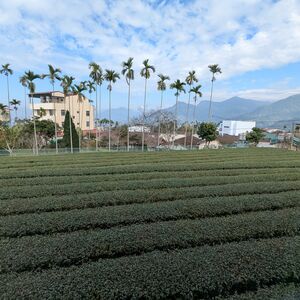
We leave Sun Moon Lake and travel south to Nantou County, specifically Lugu Township. This is the area known for the Dong Ding tea, a Taiwanese Oolong, with medium oxidation, medium roast, and with flavors of honey, and fruit. The tea is named after the nearby mountain. Apparently, this area, with its sunny days, but foggy mornings, are perfect for the tea plants. Dong Ding teas are grown at 600-900 meters. It is not a high mountain tea, which is grown at elevations of over 1000 meters.

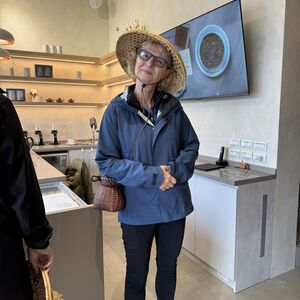
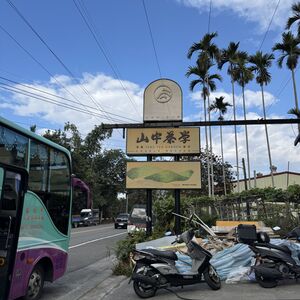
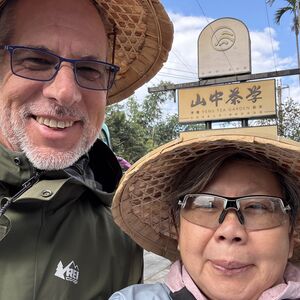
Our first stop is Yen's Tea Garden in Guangxing Village. This is to be a DYI experience. We are met outside a very modern tea storefront/studio by Tomato (full name: Cho Ying-ling). She and her husband are designers by education, but have come back to work with the family's tea plantation. Tomato hands us conical hats woven from bamboo leaves. I am very familiar with these hats: everyone in the country-side wore them outdoors for harvesting, planting, and sun screen. I know them as "liangmo" which is probably Hakka for "cool hats". Tomato is not Hakka, and she did not recognize my garbled pronunciation of the hat name in Hakka.

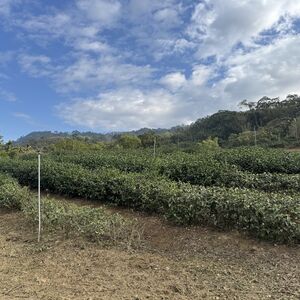
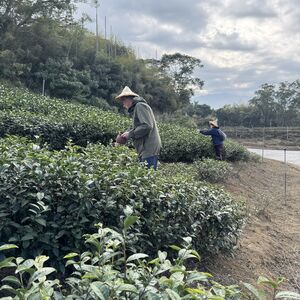
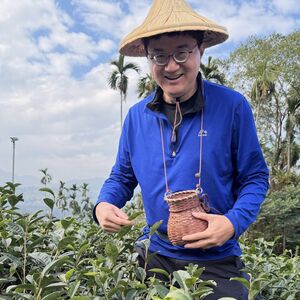
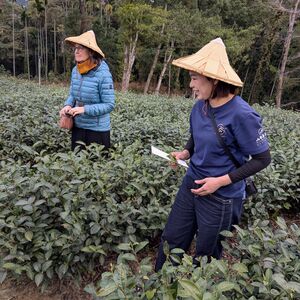
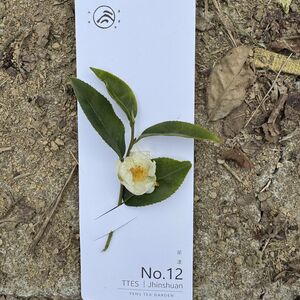
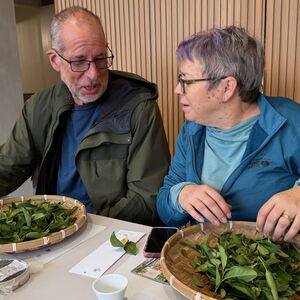
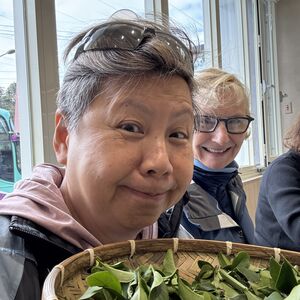
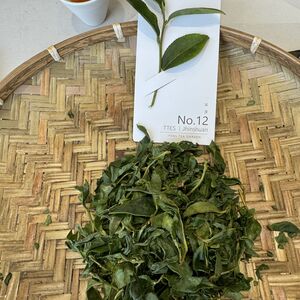
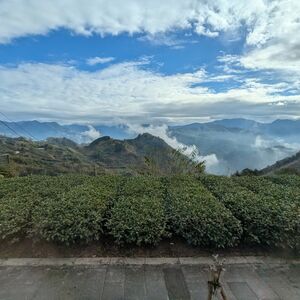
She does give us each a hat and a basket and she leads us up the mountain road to rows of tea plants. Her mother-in-law manages the growing, oxidizing and roasting of tea. Tomato and her husband are taking care of the front end, and are really trying to educate people on tea, hence this new business venture of the DYI experience of letting people pick the teas, roll the leaves, and simply understand the process of tea. We are to pick tender leaves with two or three leaves each. The pickings are slim because they had just harvested in December. Still, there is enough for all of us to fill our baskets. We are to pick off the flowers if we see them. The tea we are picking is actually TRES #12, a Milk Oolong or Jin Xuan (Golden Daylily) with a creamy, buttery and floral flavor profile. It is a cultivar developed by the Taiwan Tea Research and Extension Station (TRES) in 1981. This is a wonderful surprise, because this is the tea I order at my local coffee shop (KOMA) since they started carrying them a year ago.

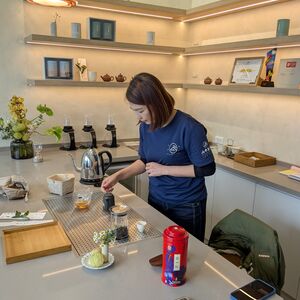
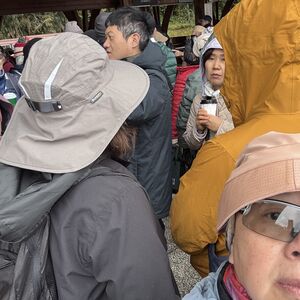
After we have harvested enough leaves, Tomato leads us back to the showroom where we are given a flat basket to roll our tea leaves. Basically, we are breaking the leaves down to release oils and moisture. Once they have been rolled enough, we place them in a paper ring where they will be roasted. The sealed packages will be sent to our last hotel in Taipei as souvenirs. It was fun to get our hands on the tea, to understand just what it takes to roll and shape the teas before roasting. While we roll the teas, Tomato is busy brewing teas for tasting.

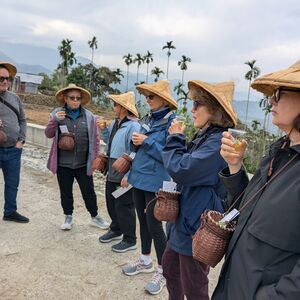
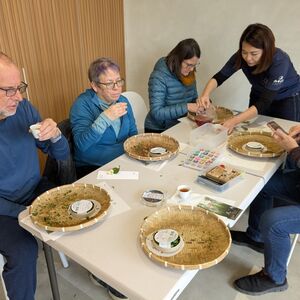
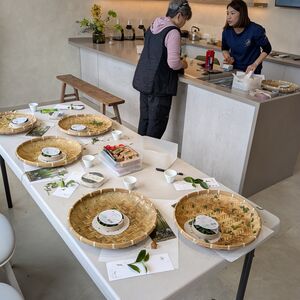
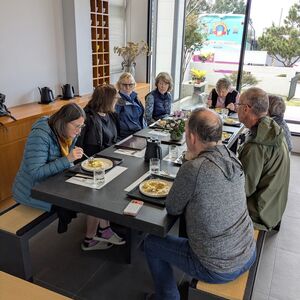
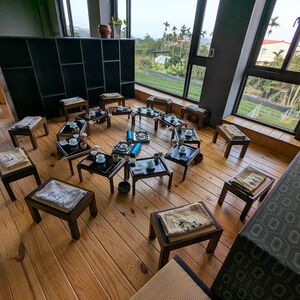
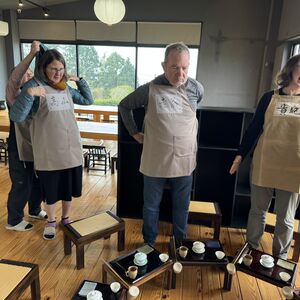
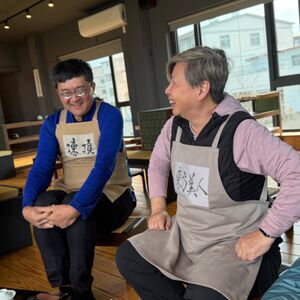
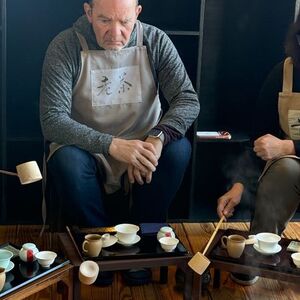
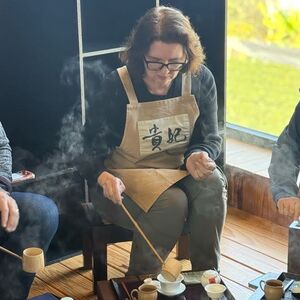
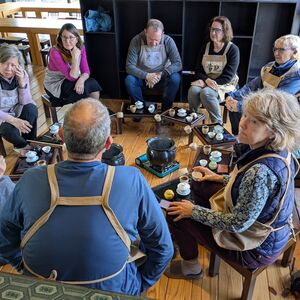
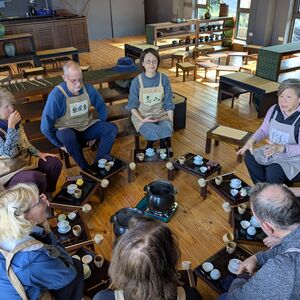
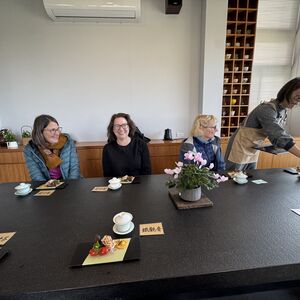
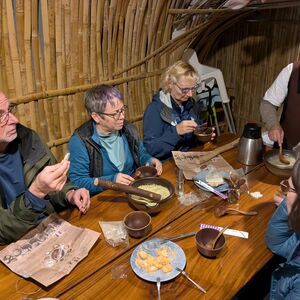
Our second stop is at Wei Lu Zhu Tea located in another village. It is higher in the mountain, and we are to have lunch there as well as a communal tea demo. The tea house building is located in the midst of tea fields and is a very new two-story building. The interior is modern with a pared-back Chinese tea house feel. We remove our shoes and put on slippers at the entry. It is lunch time and the tea house will provide lunch. This is something the tour company arranged since there is a dearth of restaurants in this area. We had no expectations, but lunch was a series of fresh dishes beautifully prepared and delicious. Before dessert, we all troop upstairs for a communal tea experience around a hot stove. We re each given an apron with the name of our tea, and our hostess/teacher takes us through a description of the various teas, how long to brew them, and at what temperature. She demonstrates a typical female way to hold tea cups and sip tea, and the male counterpart. We brew our tea, sip, and then share with our neighbors. After the demo, we go downstairs once more and have our dessert. I compliment the chef and she said she did this as a hobby. This was a definite highlight. And the teas? So varied, and so good!

We finish around 3 PM and leave the Lugu area for Chiayi, where we will be staying two nights at the Maison De Chine. Tonight we hit the Wenhua Road Night Market, where Kent shows me a wonderful shop for Tofu Pudding. It is too late to explore the area, but we do have another night here. After we hit the night market, we gather in Chau-Wen's room and have drinks and snacks. Laundry is also free, so time to take care of that as well. Tomorrow, we go up to Alishan and will spend the entire day forest bathing.

Green Shower in Alishan - back to Chiayi

edit
On our way up the mountain
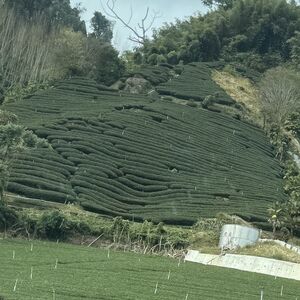
High mountain tea bushes
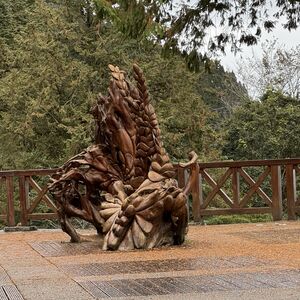
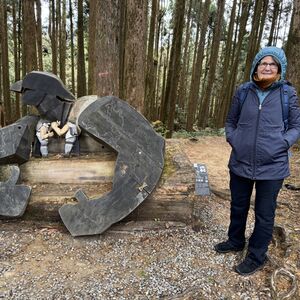
Wood sculpture in front of the Alishan Train Station
Yep, lots of people waiting to board the train
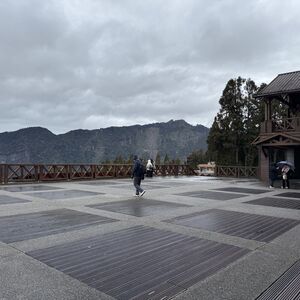
The view in the morning from the train station
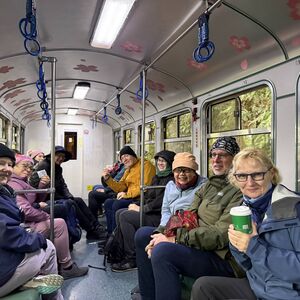
On the way, bundled up and excited
Going up the mountain
Alishan, maybe Mary remembers what this is
The trees!
The trees!
It is a good hideout
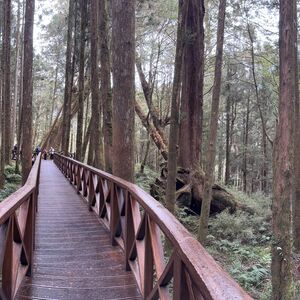
The paths
The paths
Just being silly
Just being silly
We are colorful undergrowth
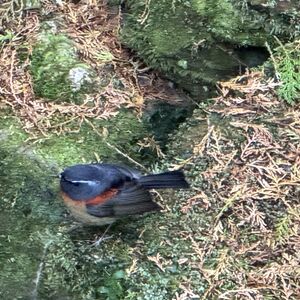
A male Collared Bush-Robin (less than 5" long, endemic to Taiwan)
Two Sisters Pond
Two Sisters Pond
It is simply beautiful here
Kathi and I get lunch.  Note the bamboo plate at the far end of the counter, that is the edible memory I mentioned
Kathi and I get lunch. Note the bamboo plate at the far end of the counter, that is the edible memory I mentioned
Shouzhen Temple: shrine of the Supreme Emperor of the Dark Heaven...
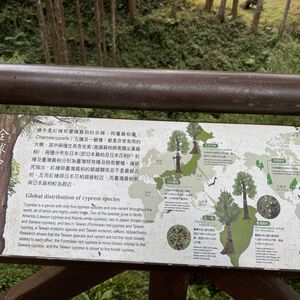
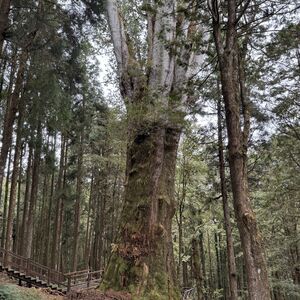
Cypresses don't grow just anywhere
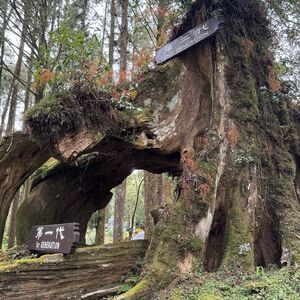
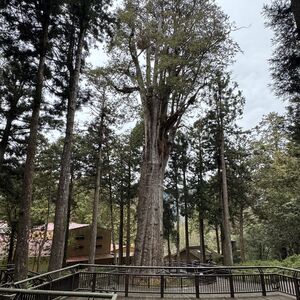
Three-generation tree
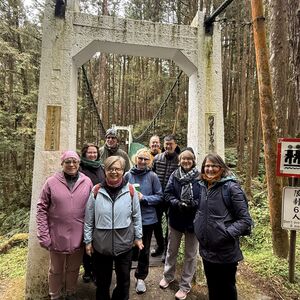
Only 6 people at a time across the suspension bridge
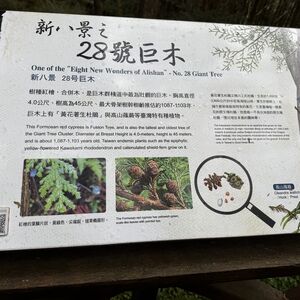
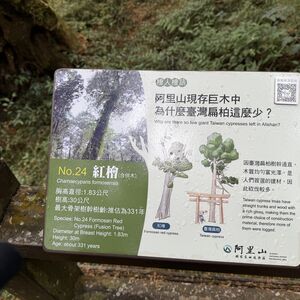
Description of tree number 28
Tree #28
Tree #28
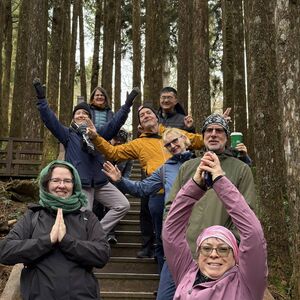
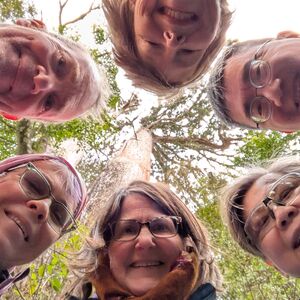
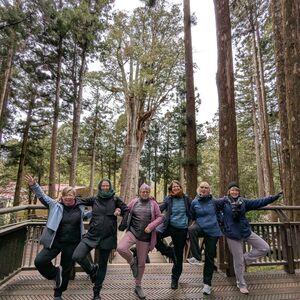
Group photo
Group photo
Panorama
Panorama
Why it is sometimes better to be gnarly
Nice shot Chau-Wen!
Nice shot Chau-Wen!
Worker-bee trains
Worker-bee trains
Bill's idea of a group photo.  Love it!
Bill's idea of a group photo. Love it!
The old trees are numbered, maybe this is #28?
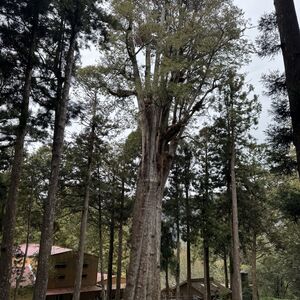
Thousand Year Cypress (11 m circumference, actually about 2000 years old)
Female power in front of the Thousand Year Cypress
Waiting to cross the tracks for our return trip
One of my favorite pictures of Kathi
Getting off the train
An emptier train station
We did not get to cross the larger suspension bridge
This is what everyone stood in line to buy. Savory on the left, sweet on the right
Song of the Forest and the woven tunnel by Wen-Chih Wang
Song of the Forest Installation
View out of the tower
Hinoki Village Bungalow
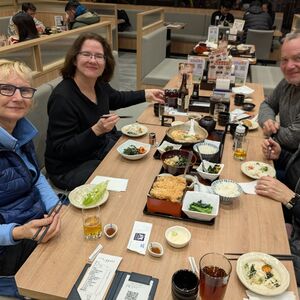
The others at their Japanese dinner

Alishan conjures up cloud seas at sunrise. If we were to start from Chiayi's train station, it could take up to 5 hours, leaving no time to hike. Instead, Kent suggested we drive up, then ride the Forest Railway from the Alishan Station in Zhongzheng Village to the Scenic Area where the Sacred and Giant trees are located. He also warned us it will be cold, weather up in the mountains will most likely be in the 40s. This would mean we will miss stopping at Fenqihu (and the bentos and bamboo forests), a small price to pay. It is a 2-2.5 hour drive.

Weather is wet and chilly as the bus climbs from the plains of Chiayi towards Alishan Range. Mr. Lin is a good driver. While the bus is shorter, it is still wide, and the mountain roads are narrow. We do pass rows of high mountain tea plantations, their long rows hugging the mountain and changing with the elevations, but there is no time to stop since there is a train to catch. We will miss the cloud seas, but can get a glimpse of what it would be like when we look down into the hollows as we climb the hairpin turns. We get into Zhongzheng, and Kent suggests we get something to eat from the 7-Eleven while he picks up our tickets at the Alishan Station. We are a pack of locusts (along with others) who sweep through picking up onigiri, sandwiches and tea eggs. The Taiwanese 7-Elevens are known for their tea eggs and roasted sweet potatoes. My mom had to have her sweet-potato every day when visiting the island.

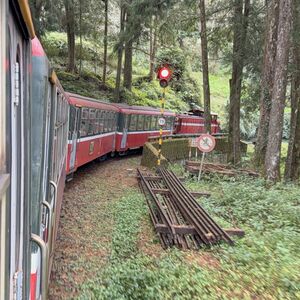
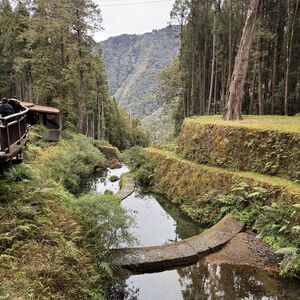
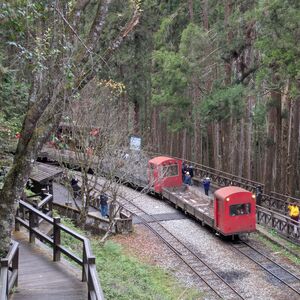
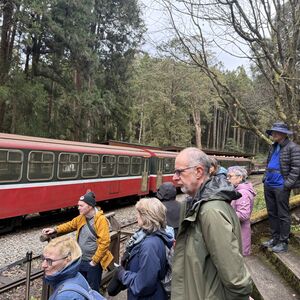
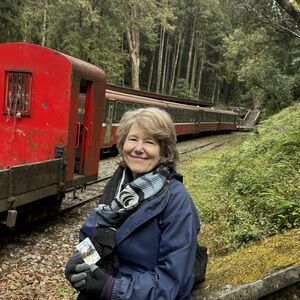
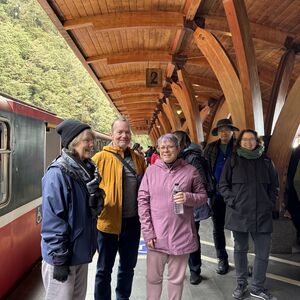
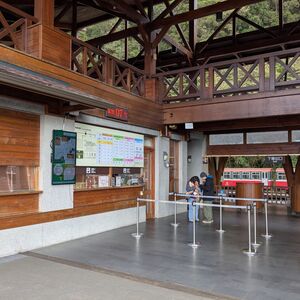
The station is new-ish (2007), with exposed cedar beams. Nice. I had read that the portion of the narrow-gauge train we will be riding stopped running for a while, but reopened in 2024. The station sits at 2216 m (7270 ft). The trains and tracks were originally laid down by the Japanese to harvest the large Formosan Cypress (hinoki). These were brought all the way down towards Chiayi. I have always wanted to ride the train to see the sea of clouds and the giant trees in Alishan. And...here we are, most of us bundled and wearing everything we brought. Ah, to think we are so close to the Tropic of Cancer... I am toasty though, I always travel with extra buffs and gloves. See the nice black and white headgear Pete is wearing? It is a souvenir from a January trip to Iceland. He is grateful for the warmth.

The train ride is fun, all of us sitting in these old train cars resurrected from the Japanese era, meaning the 1930s in this case. The train winds up the slopes, trees on both sides. The air quality seems to change. It is fresh, piney, and humid. We climb higher. Fifteen minutes later, we are there. We get off at the Sacred Tree Stop (Shenmu).

I am home. The first word I ever learned to write is my last name, Lin (Forest 林), composed of two woods. It is an old ideogram, and I loved that it looked like a tree. In traditional families, the second character of a child's name often designates one's generation status. In my father's family, all the boys of his generation had Sen (森also meaning forest) as the last character. My third uncle is named 林木森 (Lin Mu-Sen), which translates to Forest-Wood-Forest. And if you count correctly, there are six woods in his name. Imagine his delight when learning to write his name!

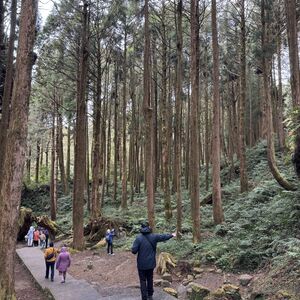
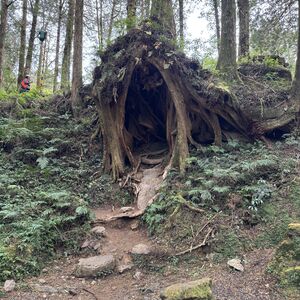
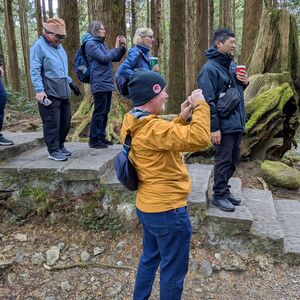
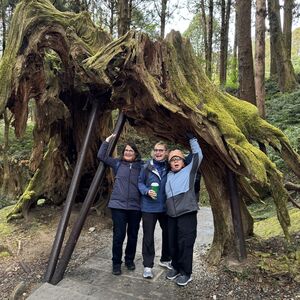
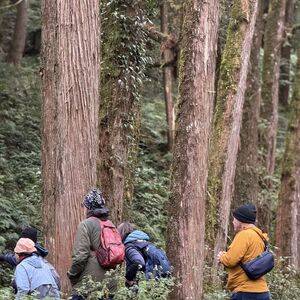
I digress. I LOVE trees. We have explored so many old world growths since I left Taiwan, and I never tire of them. Per Wikipedia, the name Alishan is derived from the Tsou people's word Jarissang. Another source says it is derived from the word "Alit" which means "ancestor mountain." Either case, the name has never been from the Han Chinese, and for me, I had always loved the fact that the name simply belonged to the Island and to the people who predated the Chinese, Portuguese, Dutch and Japanese. I had envisioned a wilder place, with more primitive paths, but these trails are well-maintained and stepped, and well-used. It is a good thing because my eyes are everywhere but the path. The first portion of the trail is to the Sisters Pond, and it is crowded with all the folks who came on the train. I am not sure where they are all going in such a hurry. Since Kent is leading us, I am just following, without a map. We are seeing old trees, and trees growing inside trees. Lots of giant trees already, and we are not even at the Giant Tree Trail. OMG the trees! You start at eye level and tilt your head way back to see into the canopy, and even then, it is not enough! I can wax lyrical about the trees for days, but I won't. I will let the images speak for themselves.

We stop to get a bite to eat near the stalls at the Shouzhen Temple. There are stalls serving all kinds of food, and good coffee (locally grown). But my favorite has to be the steamed rice cakes in the shape of a leaf filled with a pickled and salted turnip. I almost missed this plate of goodies, so casually was it presented. Sorry, no good pictures. For less than $2, I taste memory. And the moment is poignant and so fleeting. There are facsimiles of this (especially in Vietnamese cuisine), and I have been duped before. Kent is not impressed, and Kathi takes a bite and says it is good. Sigh, this is heaven, what is better than being able to taste one's dream?

While wandering the trails we hear a booming song from a nearby building. It was a female voice extolling the virtues of brushing teeth. Turns out it was from the nearby elementary school (Siang Lin). It was just after lunch and before the kindergarteners' nap time. We later asked how many students are in the school, and I believe the woman said 17 total.

Next time, I would try to get a room in one of the hotels in Alishan. I would wander the forest the first day, and get a very good nap, and watch the sunset, and catch the stars, and wait for the sunrise, and then back to the hotel to sleep the next day away...

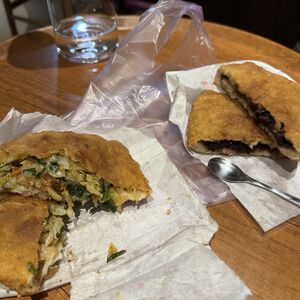
We get back to Chiayi around 6 PM. On the way down the mountain, we stop by a local goods co-op and sample some cookies, and I get some high mountain Alishan tea. Tonight is an open night, we can go back to the Night Market, or try the food hall in the mall close to our hotel. By the way, Maison de Chine has a Japanese floor, where the rooms have tatami (next time). I run downstairs and across to this stand I noticed from the balcony the night before. I wasn't sure what they were selling, but noticed the long line of people. Turns out to be a stand run by three sisters that sold deep fried pockets filled with scallions, eggs, peanuts and sugar (not all at once). Very oily, and very delicious.

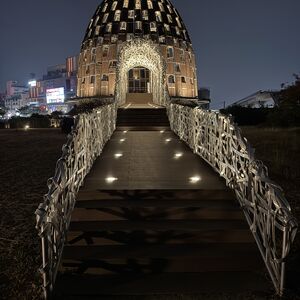
We split up for the evening and while others went to the food court in the mall, Kathi and I wander over to this tower structure. It is an art installation by Wang Wen-Chih called the Song of the Forest. Turns out he is well known for his woven structures, some of which is featured here. This piece was a commission of the Alishan Forest Railway to be evocative of the sacred tree, the tunnel, and the tracks of Alishan Forest Railway. It is an interesting space, both the approach and the view out the open lattice of the tower. It is a beacon at night. Turns out the others also came by after their meal. One can't miss it. While I love the piece, I think the lighting designer could have been more delicate in uplighting this piece. Everything appears to be at the same intensity.

Kathi and I wander further into the now closed Forest Railway compound. There is no one around and the roads are blocked. We are now wondering how to get out of here since there appear to be concrete jersey walls between the compound and the street. Hah! We see a break, and gingerly squeeze our way to onto the Main Street. We are standing on the road, getting ready to cross the street, but see all these motorcycles cutting in front of us into this box to our right. Turns out it is how motorcycles are allowed to take a left turn in this four-lane road. Motorcycles and mopeds squeeze into this box on the right and turn facing the cross street. Then they simply cross at the light as we cross. We do have a destination. Kathi wanted to see the Hinoki Village, a cultural village located in the original dormitories of the Chiayi Forest Division during Japanese rule. We come up to it, and it is dark. The village is composed of low Japanese style bungalows facing each other across a public garden space. We go up and shine our phone lights into the spaces. Would have been nice to have seen the interiors. All day sightseeing doesn't leave much time for other things.

Xiaoliuqiu .... and Turtles!

edit
Either "WTF?" or "What YOU looking at?"
Intrepid explorers Amy and Pete, styl'n
Guide would pull us right over the top (too close)
Amy, me, and the largest marine reptile
I was too close to get the whole pic
Shit, he saw me....
Shit, he saw me....
My favorite pic
My favorite pic
Guide kept trying to get me to make some sort of sign, but I failed
We were delivered from the beach hanging on the back of scooters

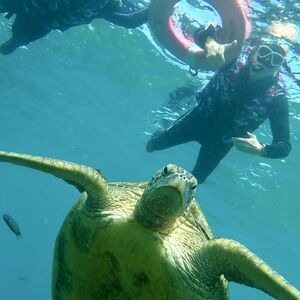
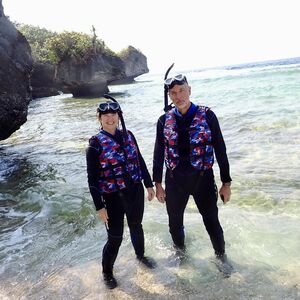
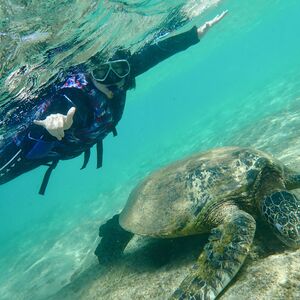
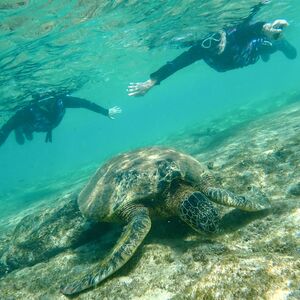
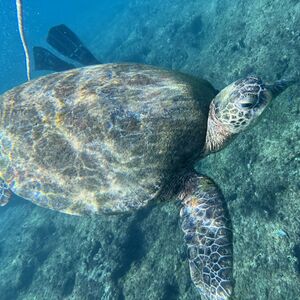
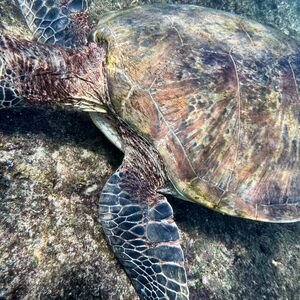
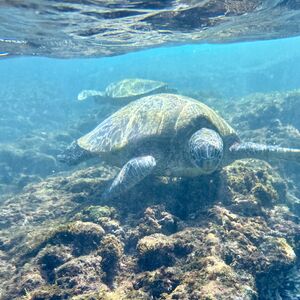
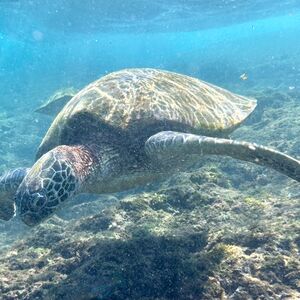
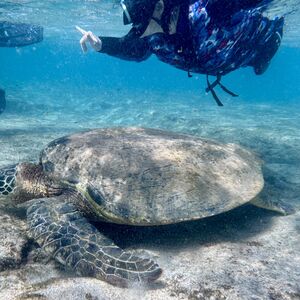
(pete here) Just off Taiwan's coast lives an island where green sea turtles lay their eggs and frolic in the shallows. Despite it being January, we were told that one could snorkel year round. We initially had at least six takers, but when told that wetsuits were necessary, only Amy and I braved the slightly chilly waters. So we geared up and got on the back of mopeds to whiz to the shores, where we were slightly confused to not have swim fins. After much pantomiming, we understood we were to hang on to a small life buoy, which our guide would use to tow us around on the surface. What! Actually, there was so much coral and the sea so shallow, that this was not a bad thing. Our guide was very good about maneuvering us around the coral and towards the turtles. Once you get to the right place, the turtles basically surrounded us, seemingly unconcerned about big goofy humans swimming clumsily around them (I mean, we had no fins....). Our guide was very serious about getting us up close and trying to get us to make various hand signals, but we were more concerned with not inadvertently touching any.

All that being said, swimming with giant sea turtles in their environment is one of those memories that you know are not going to fade. The turtles were massive and graceful, beautiful and soulful. One of the craziest, most fun things we were able to do.

placeholder

edit

placeholder

edit

placeholder

edit

placeholder

edit

placeholder

edit

placeholder

edit